Santa Clarita summers are hard on houses. Weeks of triple-digit heat, single-digit humidity, and relentless sun dry out caulk, swell doors, cook exterior wood, and push your AC to its limit - often all at once. The good news is that almost none of it fails overnight. Small problems announce themselves in June and July, and if you catch them then, they stay small.
This is a room-by-room and area-by-area walk-through you can do in an afternoon. Most of it is DIY-friendly - a caulk gun, a screwdriver, and a careful eye go a long way. A few items are worth handing to a pro, either because they are up a ladder, behind a wall, or the kind of job that is faster and cheaper to bundle with everything else. We flag those as we go, and finish with a short "DIY vs delegate" summary so you know exactly where the line is.
Before You Start: What to Grab
You do not need much for the walk-through itself. The goal on the first pass is to find and note problems, not fix every one on the spot. Carry a notepad (or your phone) and write down anything that needs attention room by room.
- Notepad or phone to build your repair list
- Flashlight for weatherstripping, under-sink, and attic-hatch checks
- A screwdriver to test loose hinges, handles, and fixtures
- A stick of chalk or painter's tape to mark spots that need caulk or paint
- Exterior-grade caulk and a caulk gun for the quick seals you can do immediately
Room-by-Room Summer Checklist
Cooling & Air Sealing
Your AC works hardest exactly when the house is leakiest. Sealing the small gaps is the cheapest way to keep the cool air in.
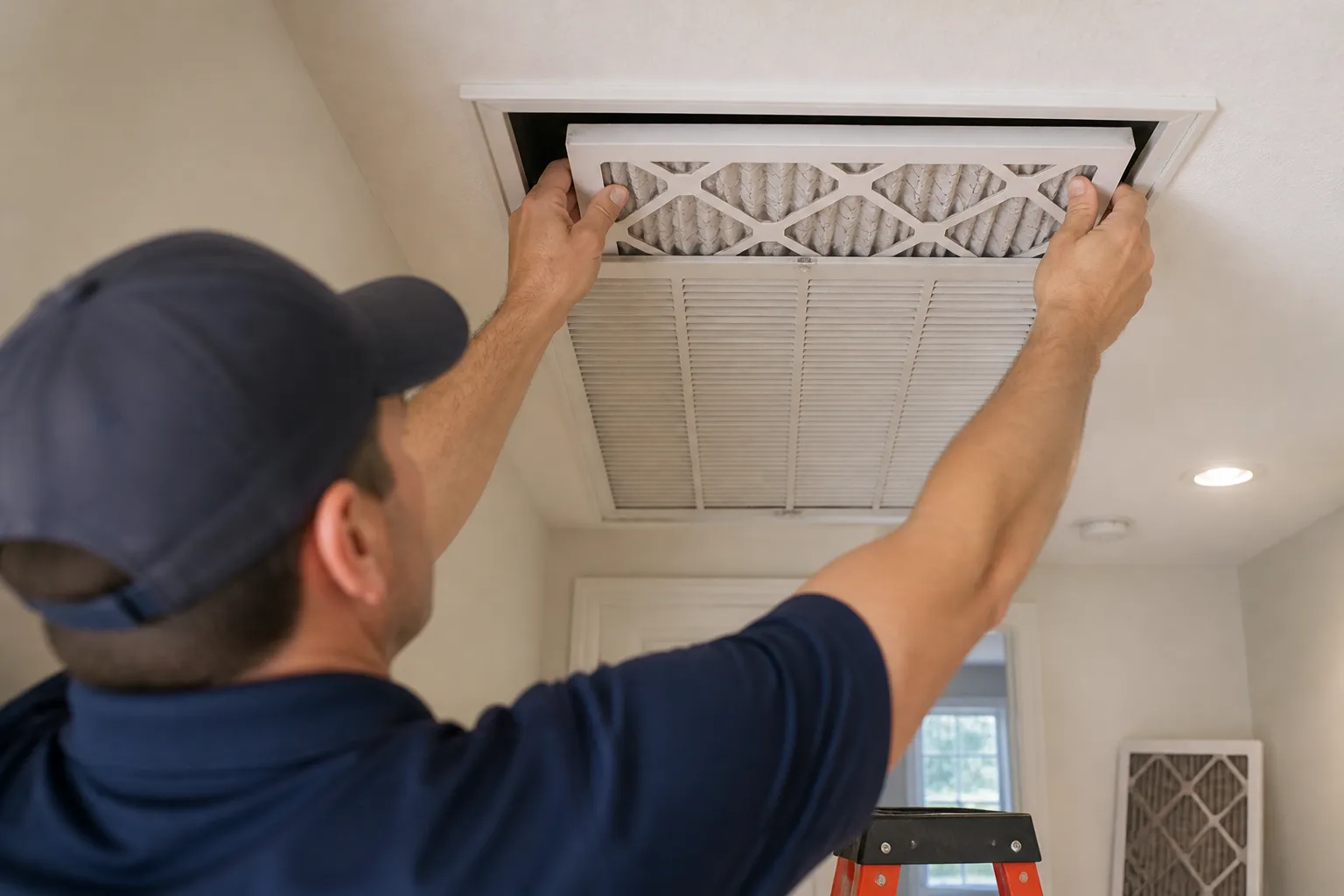
- Replace or clean the HVAC filter - a clogged filter makes the system work harder and run hotter through the worst months.
- Check the weatherstripping on exterior doors. If you can see daylight at the edges or feel warm air seeping in, it needs replacing. Our guide on how to weatherstrip a door walks through picking the right type.
- Feel around window frames and the attic hatch for warm-air leaks and add foam tape or caulk where needed.
- Clear leaves and debris away from the outdoor condenser unit so it can breathe.
Kitchen & Bathrooms
Heat and dryness age caulk fast, and a failed bead is how water gets behind tile and into cabinets.
- Inspect the caulk around tubs, showers, and sinks. If it is cracked, peeling, or spotted with mildew, strip it and lay a fresh bead - here is how to re-caulk a shower or bathtub the right way.
- Re-caulk the kitchen backsplash and around the sink rim where the old seal has pulled away.
- Run every faucet and check under the sinks for slow drips - small leaks waste water all summer and rot the cabinet base.
- Test the toilet: if it runs or hisses between flushes, it is quietly wasting gallons.
Doors & Windows
Wood swells in the heat, so summer is peak season for doors that suddenly scrape or refuse to latch.
- Open and close every interior door. A door that rubs or sticks is usually loose hinges before it is swollen wood - our guide on how to fix a sticking door covers the fast fix.
- Check that sliding patio doors and screen doors roll freely; clean the tracks of grit.
- Look at window screens - sun and wind tear them, and torn screens let dust and bugs in.
- Test that windows still latch fully; swollen frames sometimes keep them from seating.
Exterior Wood, Fences & Gates
Nothing takes the SCV sun harder than exposed wood. Fences, gates, trim, and decking all dry out, gray, and crack over a single hot season.
- Walk the fence line looking for split, cupped, or loose boards and posts that wobble.
- Open and close each gate. Heat-warped gates that drag or won't latch are a classic summer complaint.
- Check exterior door and window trim for peeling paint or bare wood - bare wood soaks up the next bit of moisture and swells.
- Look at deck boards and railings for splinters, popped nails, and soft spots.
Irrigation & Outdoors
Sprinklers run their hardest in summer, so a broken head or leak shows up as a brown patch or a spiking water bill.
- Run each irrigation zone and watch for broken or misaimed heads, geysers, and dry patches.
- Check hose bibs and outdoor faucets for drips at the handle.
- Clear gutters and downspouts now - you do not want to be doing it when the first fall wind arrives.
- Wipe down and check outdoor light fixtures and any exposed outlet covers.
Dust & Air Quality
Dry summers and Santa Ana gusts push a remarkable amount of fine dust into the house. A little attention keeps it from clogging everything.
- Clean bathroom and range-hood exhaust fans - dust cakes the blades and cuts airflow.
- Vacuum the coils behind or under the refrigerator.
- Wipe down ceiling fan blades and reverse them to run counter-clockwise for a cooling downdraft.
Which to DIY vs Delegate
Most of this list is genuinely doable with basic tools and an afternoon. Here is the honest split:
- Good DIY jobs: replacing filters, re-caulking, tightening hinges, cleaning tracks and fan blades, swapping weatherstripping, and running your irrigation zones to spot problems.
- Worth delegating: anything up a tall ladder (gutters, high trim, second-story screens), fence posts that have gone loose in the ground, gates that need re-hanging, peeling exterior paint over large areas, and any leak you cannot trace in a few minutes.
- Bundle it: when your notepad has six or eight small items, that is the moment a single handyman visit pays off - one trip covers the whole list instead of a Saturday per repair.
Common Mistakes to Avoid
- Caulking over old, failed caulk. A fresh bead only sticks to a clean, dry surface - strip the old stuff first.
- Sanding a swollen door in July. Wood that swelled in the heat shrinks back in the fall, leaving a permanent gap. Check the hinges first.
- Ignoring a running toilet or a slow drip. "Small" summer leaks are the ones that show up on the water bill.
- Waiting until fall for the fence. A loose board or wobbly post only gets worse once the Santa Ana winds start.
When to Call a Handyman
If your summer walk-through turns up a long list - or a few items that need a ladder, a wall opened up, or a fence post reset - it is usually faster and cheaper to hand the whole batch to a pro in one trip than to chip away at it weekend by weekend. Our handyman services in Santa Clarita cover caulking, doors, fences, fixtures, and the rest of this checklist, and we quote the whole list free up front so you can decide what to tackle yourself and what to delegate.
Estimated time: about 1–2 hours for the full walk-through and note-taking; the quick fixes (filters, caulk, hinge screws) add another hour or two depending on how much your list turns up.