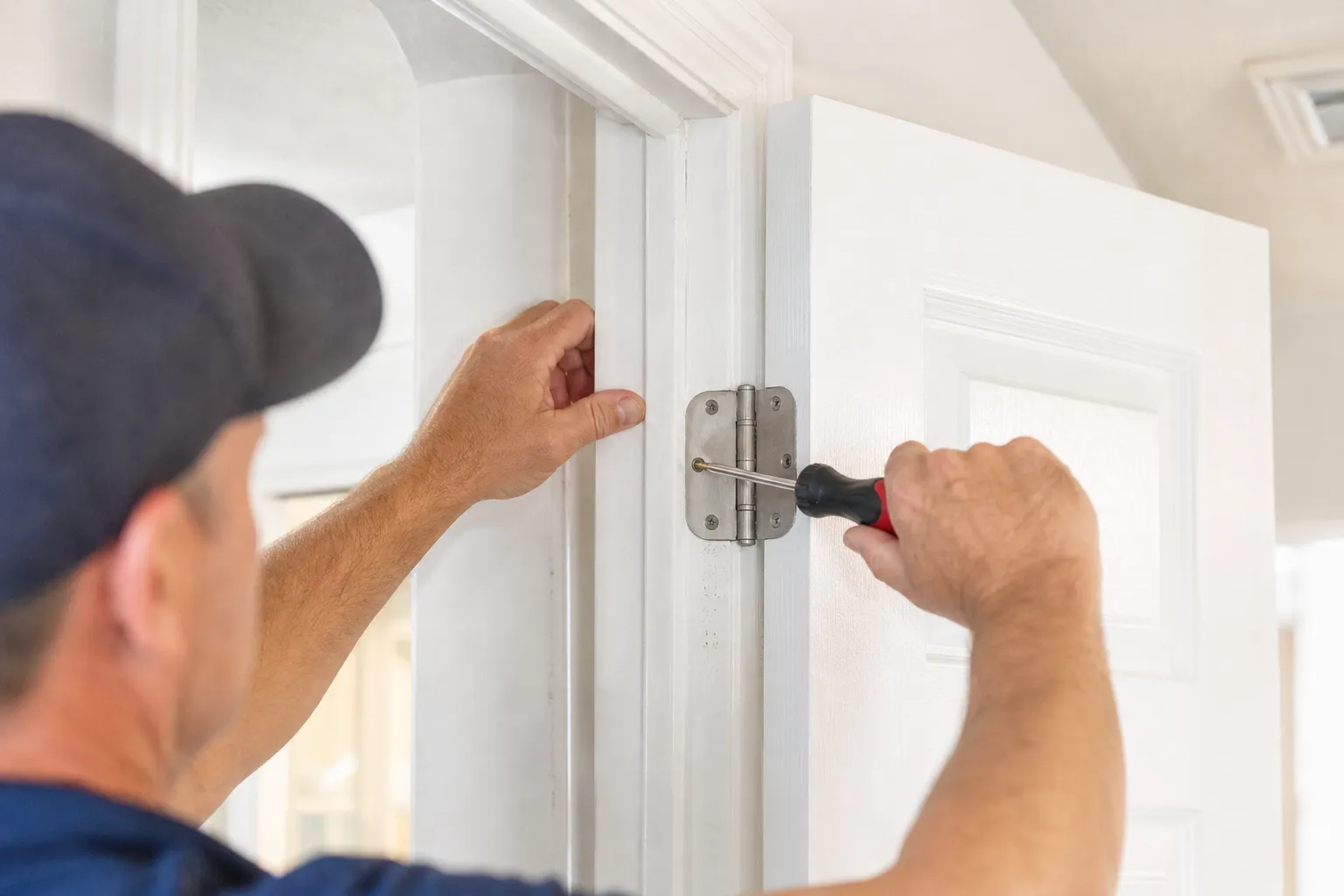
A door that scrapes the frame, drags on the carpet, or needs a shoulder to open is one of the most common calls we get, and one of the most satisfying to fix. Most sticking doors come down to three things: seasonal humidity swelling the wood, hinges that have worked loose, or a frame that has shifted as the house settled.
The good news: if your door started sticking recently and only rubs in one spot, this is usually a 20-minute DIY fix. When it's better to call a pro: if the door sticks in several places, the gaps around it look uneven, or you can see daylight or cracks at the corners of the frame, the problem is likely structural - and planing the door will only mask it. We'll cover both below.
What Causes a Door to Stick
Before you touch a tool, find where the door rubs. Close it slowly and watch the gap between the door and the frame (the "reveal"). Run a piece of paper around the edge; where it catches is where the door is binding. The location tells you the cause:
- Rubs at the top or along the latch side: almost always loose hinge screws letting the door sag.
- Rubs at the bottom, worse in summer: humidity and heat swelling the wood - very common in Santa Clarita's dry-then-humid seasonal swings.
- Rubs on the hinge side or sticks in multiple places: the frame itself may have shifted. This is the "call a pro" case.
Tools & Materials You'll Need
- Screwdriver (usually Phillips)
- A few 3-inch wood screws
- Pencil and painter's tape to mark the rub spot
- Medium-grit sanding block or a hand plane (only if sanding is needed)
- Wood shims or a stack of business cards (for the hinge trick below)
- Touch-up paint or primer for any sanded edge
How to Fix a Sticking Door, Step by Step
Tighten the hinge screws first
This solves more sticking doors than anything else. Open the door, support its weight, and firmly tighten every screw in both hinges. If a screw just spins, it has stripped out. Replace it with a longer 3-inch screw that reaches past the frame into the stud behind it.
Test again before sanding
Re-close the door. Tightened hinges often pull a sagging door back up just enough to clear the frame. If it swings free now, you're done - no sanding needed.
Mark the exact rub point
If it still catches, rub a pencil along the sticking edge or close the door on a strip of painter's tape. Where the tape scuffs or the pencil transfers is the only spot you need to touch.
Sand - don't over-plane
Sand only the marked area with a block until the door clears. Remove a little, test, repeat. Take off too much and you'll be left with an ugly gap once the wood shrinks back in cooler weather.
Seal the bare edge
Any sanded or planed edge is raw wood that will soak up moisture and swell again. Prime and paint it so the fix lasts.
Common Mistakes to Avoid
- Planing before checking the hinges. Nine times out of ten the door is sagging, not too big. Removing wood then makes the gap permanent.
- Sanding the whole edge. Only the rub spot binds. Touch the rest and you'll open drafty gaps.
- Leaving bare wood unsealed. Unpainted edges swell right back in the next humid stretch.
- Ignoring diagonal cracks at the frame corners. That's a settling sign, not a door problem.
When to Call a Handyman
Call a pro if the door sticks in several spots at once, the gaps around it are visibly uneven, the frame corners are cracked, or the door is solid-core or exterior (heavy doors that are hard to rehang safely). These point to a frame that has moved. The real fix is re-shimming or re-hanging the door, not sanding. Our door repair service in Santa Clarita handles sagging frames, mortised hinges, and strike-plate alignment in a single visit.
Estimated time: 15–30 minutes for the hinge-and-sand DIY fix; a professional frame or re-hang repair is typically a 1–2 hour visit.