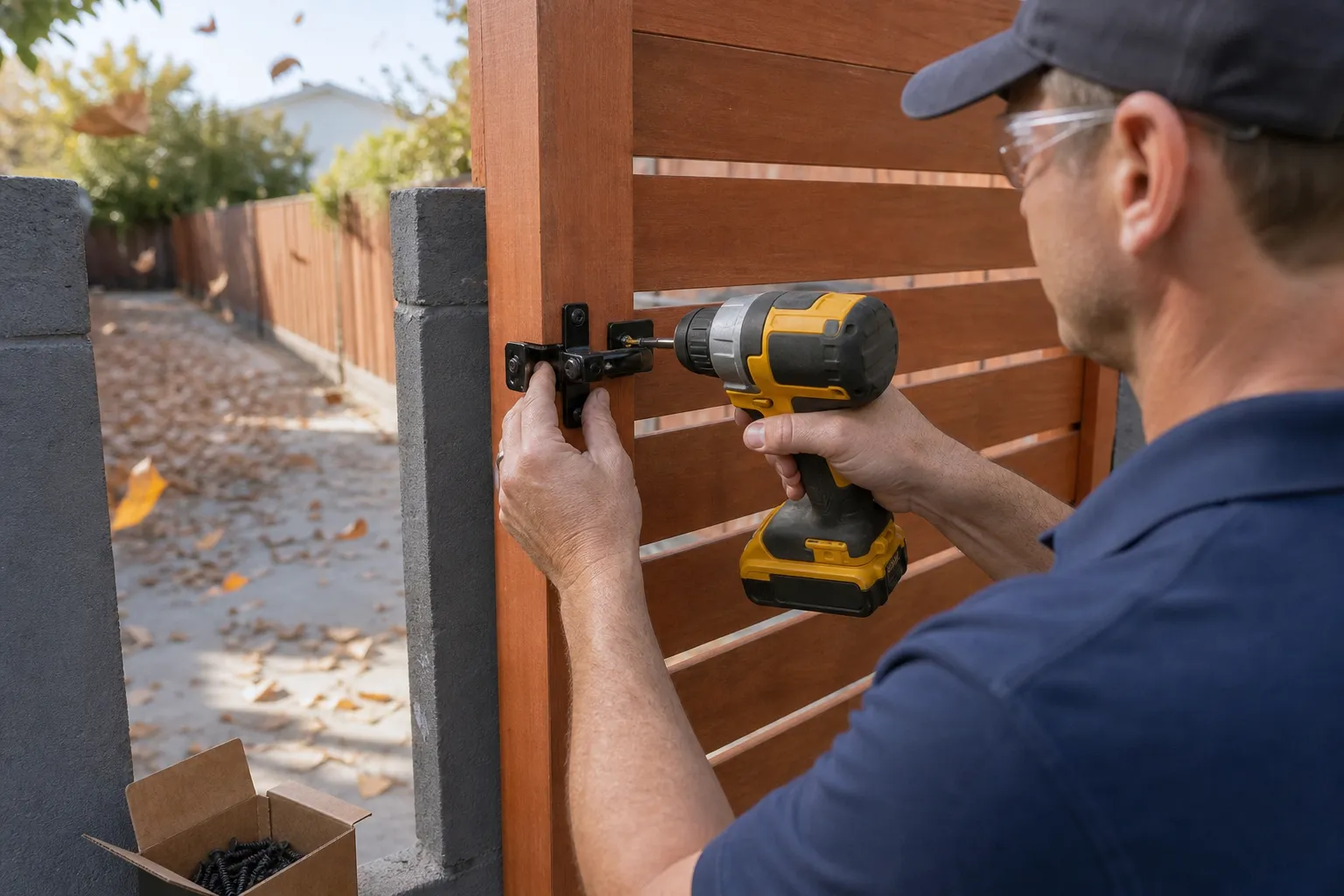
Every fall the Santa Ana winds sweep down through the passes and press on every loose thing your house owns. A gate that only rattled all summer suddenly tears off a hinge; a strip of fascia that was "fine" peels back overnight; the patio umbrella becomes a projectile. The winds don't create these weak points - they find the ones that were already there and expose them all at once.
The good news is that a pre-wind walk-around is the most DIY-friendly maintenance you'll do all year. Most of it is tightening, securing, and clearing - no special skills, just an hour with a screwdriver and a ladder. When it's better to call a pro: anything up high on the roofline, a leaning fence or gatepost that needs resetting, or tree limbs over the house that are too big to handle from the ground. Below is the checklist we run ourselves before wind season, grouped so you can knock it out zone by zone.
Why Santa Ana Winds Are Different
Ordinary breezes push steadily. Santa Anas come in hard, dry gusts that change direction and hammer the same fixture over and over. That repeated flexing is what backs out a screw, splits a dried-out fence board, or works a loose shingle free. Because our summers bake everything dry first, wood and caulk are at their most brittle right when the winds arrive - so fall is exactly the wrong time to have "I'll get to it later" items on the list.
What You'll Need
- Drill/driver and a set of exterior screws (3-inch deck screws are handy)
- Adjustable wrench and pliers for bolts and gate hardware
- A sturdy ladder and a helper to foot it
- Loppers or a pruning saw for small overhanging branches
- Exterior caulk and a caulk gun for open gaps
- Ratchet straps, ground anchors, or storage space for loose yard items
The Pre-Wind Checklist
Gates and fences
This is the number-one wind casualty, because a fence is a giant sail and a gate is the sail's weakest panel.
- Grab the top of each fence post and push. Any wobble means the post base is weak - flag it now, before a gust decides for you.
- Tighten every gate hinge screw. If a screw spins freely, swap it for a longer one that bites into solid wood.
- Check that the gate latch fully catches. A gate that only rests closed will bang itself apart in a gust.
- Re-nail or re-screw any loose pickets and rails. A single flapping board pulls its neighbors loose.
- Look for soft, punky wood at the base of posts - dry rot plus wind load is how fences come down.
Fascia, trim, and siding
- Walk the perimeter and look up at the fascia boards along the roof edge. Anything cupped, lifted, or pulling away from the nails is a wind target.
- Press on trim around windows and garage doors. Loose trim catches wind and rips.
- Re-caulk open gaps where trim meets stucco or siding, so wind-driven dust and rain can't get behind it.
- Check that gutter straps and downspouts are still screwed tight.
Patio and outdoor items
- Take down or lash the patio umbrella - it is the single most common flying-object call we hear about.
- Stack and store lightweight chairs, side tables, and planters, or group and strap them.
- Secure the trash and recycling bins; a full bin still tips and rolls in a strong gust.
- Bring in door mats, garden flags, string lights, and anything else that can peel loose and whip around.
- Check that the pergola or patio-cover fasteners are tight where the structure meets the house.
Roof and tree overhangs
- From the ground, scan the roof for lifted or missing shingles and any loose flashing - note them, but leave roof-walking to a pro.
- Prune small dead or overhanging branches that could scrape or drop onto the roof.
- Flag any large limb hanging over the house or fence for a tree service; those are not a ladder-and-loppers job.
- Clear leaves and debris from valleys and gutters so a gust doesn't pack them into a dam.
Common Mistakes to Avoid
- Only bracing what already broke last year. Wind finds new weak points every season - run the whole list.
- Tightening a hinge screw into stripped wood. If it spins, it isn't holding. Go longer or move to fresh material.
- Leaving the gate for last. It's the first thing to fail and the easiest to secure - do it first.
- Climbing onto the roof in the wind. Note roof issues from the ground and schedule them; never chase a shingle in a gust.
When to Call a Handyman
Some items on this list are a pro's job by design: a leaning gatepost, a gate that's already sagging, rotten fence sections, or hardware that keeps working loose no matter how you tighten it. Those won't survive a Santa Ana on good intentions. Our fence and gate repair service in Santa Clarita resets loose posts, rehangs and reinforces sagging gates, and swaps out failing hardware for wind-rated screws and hinges - ideally before the season, not after the cleanup.
Estimated time: 1–2 hours for the full DIY walk-around and securing; a professional fence, gate, or fascia repair is typically a same-visit job depending on scope.