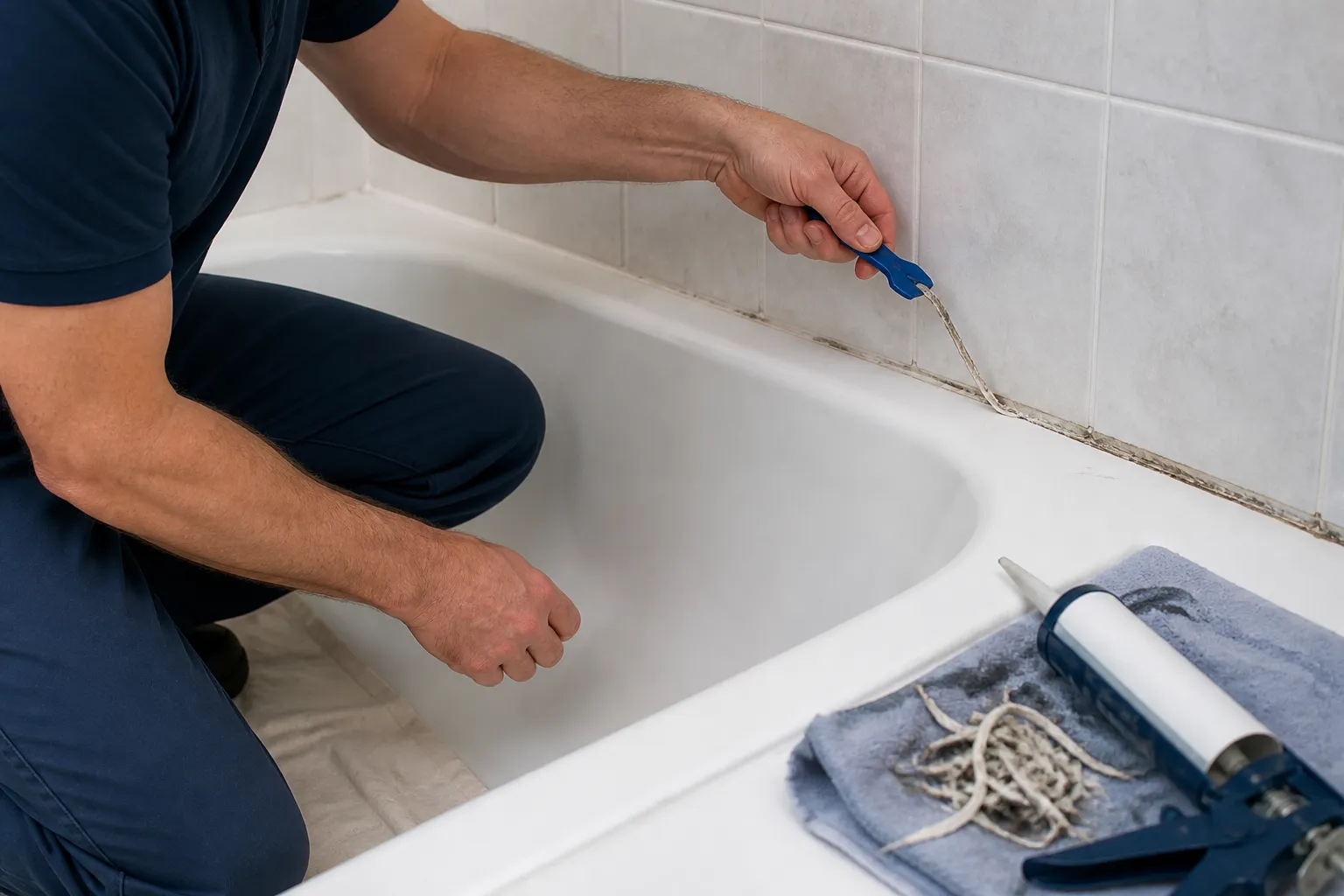
When the caulk around your shower or tub turns black, cracks, or starts peeling away from the tile, it has stopped doing its one job: keeping water out of the wall behind it. Left alone, that failed seam wicks moisture into the drywall, the studs, and eventually the subfloor - a slow leak that costs far more to fix than the ten-minute bead of caulk that was supposed to stop it.
The good news: re-caulking a shower is one of the most rewarding DIY jobs there is. If the tile and grout behind the caulk are sound and you're only replacing the flexible seam at the joints, a careful homeowner can do this in an afternoon. When it's better to call a pro: if you see soft or spongy drywall behind the caulk, dark staining spreading up the wall, loose tiles, or crumbling grout lines, the water has already gotten in - and a fresh bead of caulk over a wet wall just seals the damage inside. We'll cover the clean-and-recaulk job below.
Why Shower Caulk Fails
Caulk sits on the joints that move - where the tub or shower pan meets the tile, and the inside corners where two walls meet. Every time you fill a tub or the framing expands and contracts with temperature, those joints flex slightly. Caulk is designed to stretch with that movement; grout is not. Over a few years, three things wear it out: constant moisture breaks down the surface and invites mildew, soap scum keeps it from ever fully drying, and the flexing slowly separates it from the tile edge. Once you see a crack or a lifted edge, water is already getting behind it - there is no patching a bead of caulk, only replacing it.
Tools & Materials You'll Need
- 100% silicone caulk labeled mildew-resistant or "kitchen & bath" (not acrylic latex - it won't last in a wet joint)
- Caulk gun (a dripless gun makes a cleaner bead)
- Caulk-removing gel or solvent to soften the old bead
- A plastic caulk-removal tool or a stiff putty knife
- A utility knife or razor scraper
- Rubbing alcohol and clean rags
- Painter's tape
- A spray bottle of soapy water for tooling the bead
- Paper towels and a bathroom cleaner with bleach for mildew
How to Re-Caulk a Shower, Step by Step
Remove every bit of old caulk
This is the step that makes or breaks the job. Run a bead of caulk-removing gel along the old seam and let it sit the full time on the label to soften the silicone. Then work a plastic removal tool or putty knife under the bead and peel it out in strips. Use the razor scraper to shave off the last thin film clinging to the tile and tub. New caulk will not bond to old caulk, so leave none behind.
Clean and kill the mildew
Scrub the joint with a bathroom cleaner that contains bleach to kill any mildew hiding in the corners, then rinse. Any mold left in the seam will grow right back through your new caulk within weeks. Wipe the whole joint down with rubbing alcohol to strip off soap scum and oils that stop silicone from sticking.
Dry it completely
Silicone will not cure or bond to a damp surface. Give the joint several hours to air-dry, and don't use the shower the night before. A hair dryer on the corners helps drive out moisture trapped in the seam. This patience is what separates a bead that lasts five years from one that peels in five months.
Tape the lines
Run painter's tape along both sides of the joint, leaving a gap about the width you want your finished bead - usually a bit over an eighth of an inch. Taping gives you two crisp, straight edges and keeps stray caulk off the tile, which is the difference between a job that looks professional and one that looks smeared.
Lay a single steady bead
Cut the caulk tube tip small and at a 45-degree angle. Hold the gun at a consistent angle and pull it along the joint in one smooth, continuous pass, pushing enough caulk to fill the gap without gaps or bubbles. Do one seam at a time so the bead is still wet when you tool it.
Tool the bead smooth, then pull the tape
Mist the bead lightly with soapy water and run a wet fingertip along it in one pass to press it into the joint and leave a smooth concave surface. Then pull the painter's tape away immediately, while the caulk is still wet, lifting it up and away from the fresh bead. Peel it after the caulk skins over and you'll drag ragged edges.
Let it cure before water touches it
Check the tube, but most silicone needs a full 24 hours to cure before it's waterproof - some fast-cure formulas allow shorter. Resist the urge to shower that night. Water on uncured silicone ruins the seal you just worked to build.
Common Mistakes to Avoid
- Caulking over the old bead. New silicone will not stick to old silicone. If you skip full removal, the new caulk peels off in sheets within months.
- Using acrylic latex caulk. "Painter's caulk" is cheap and easy to tool, but it breaks down in a constantly wet joint. Use 100% silicone in a shower.
- Recaulking over a wet or mildewed joint. Trapped moisture and live mold defeat the seal from underneath. Kill the mold and dry the joint fully first.
- Showering too soon. Uncured silicone hasn't waterproofed yet - one early shower and you're doing it all again.
- Using the wall corner joints as a structural fill. If a gap is more than about a quarter inch, that's a sign of a bigger movement or fit problem, not something to bury under a fat bead of caulk.
When to Call a Handyman
Call a pro if the drywall behind the caulk feels soft, you see staining creeping up the wall, tiles have loosened, or the grout lines are crumbling - these mean water has already gotten in, and fresh caulk only hides the damage. It's also worth calling if you'd simply rather have a clean, guaranteed seal done right the first time. Our caulking and grout service in Santa Clarita handles full shower re-caulks, regrouting, and sealing tub surrounds so the waterproofing actually holds.
Estimated time: 1–2 hours of hands-on work to strip and recaulk a standard tub or shower, plus drying time before you start and a full 24 hours of cure time after - plan it around a day you won't need that shower.