Fresh, mold-free caulk and clean, sealed grout - the thin line that keeps water out of your walls and floors.
Caulk and grout are the two thin materials standing between everyday splashing and the wood, drywall, and subfloor behind your tile. When they crack, peel, or grow black mold, water starts working its way into places you can't see - and a five-minute cosmetic problem quietly turns into a rot-and-mold problem. We re-caulk, re-grout, and seal so your showers, tubs, sinks, and countertops shed water the way they're supposed to. Just as important, we know which joints call for caulk (the flexible seams where two different surfaces meet and move) and which call for grout (the rigid joints between tiles) - getting that wrong is the single most common reason a "fixed" seam fails again within a year.
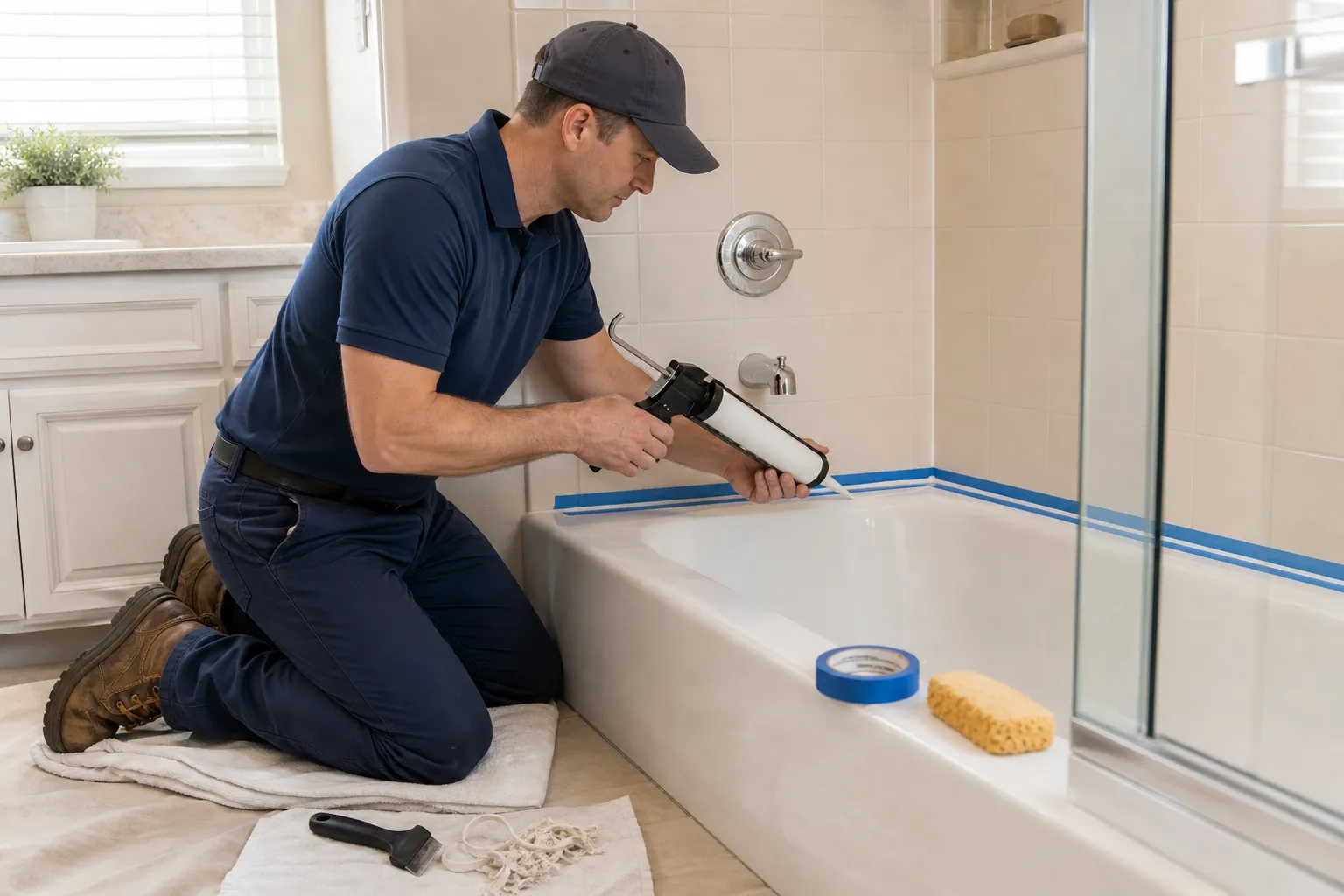
We look at every joint and decide, seam by seam, what belongs where - caulk on the flexible movement joints, grout between tiles - and check for any soft spots that hint at water damage behind the surface. Then we quote it free, up front.
We fully strip out old, moldy caulk (a proper re-caulk is never a "bead over the top" job) and rake out failed grout. We clean and treat mold and mildew on the seam so it isn't sealed in behind the new material.
We re-grout tile joints and lay a clean, tooled bead of mold-resistant silicone on the movement joints. Color is matched as closely as possible so the repair blends in instead of standing out.
Once grout has cured, we apply a penetrating grout sealer to lock out moisture and staining. We'll let you know how long to keep the shower dry so the caulk and grout set up right.
Before/after photos of real Santa Clarita caulking and grout jobs will appear here.
Re-caulking a single tub or shatter surround is usually a same-visit job; a full re-grout of a large shower or floor takes longer because the old grout has to come out and the new grout has to cure before sealing. Pricing depends on how many linear feet of seam are involved, whether it's caulk, grout, or both, and how much mold cleanup the seams need. We give a firm, free quote up front - no hourly surprises. If you're weighing a quick DIY bead against calling us, this guide on how to re-caulk a shower or bathtub walks through what the job really involves.
We provide caulking and grout repair throughout the SCV:
Quick answers before you book
It depends on the joint, not your preference. Grout belongs in the rigid gaps between tiles; caulk belongs on the movement joints - where tile meets the tub, the countertop, the floor, or turns an inside corner. Those seams flex as the house shifts and the tub fills, and rigid grout there will just crack. If your grout lines between tiles are failing, that's a re-grout. If the seam where the tile meets the tub is failing, that's caulk. We often do both in one visit.
Usually one of three reasons: the old caulk was never fully removed so mold was sealed underneath, the wrong product was used (painter's or acrylic caulk instead of a mold-resistant silicone rated for wet areas), or the bathroom stays damp with little ventilation. We strip the seam completely, treat any existing mold, and lay a mold-resistant silicone - and we'll point out ventilation fixes that keep it from coming back.
We match as closely as we can. Grout comes in dozens of shades, and existing grout has usually aged, so a brand-new color rarely matches a wall of ten-year-old joints exactly. We match to the current color, and for a bigger visual reset, color-matched grout paint or a full re-grout in a fresh color are both options we can walk you through.
Yes. Most cement-based grout is porous and soaks up water and stains unless it's sealed. After a re-grout we let the grout cure, then apply a penetrating sealer. We can also seal existing grout that's still in good shape but was never sealed - a cheap way to protect a shower or kitchen floor and make it far easier to keep clean.
Get a free quote today - fresh caulk and sealed grout keep water where it belongs.