Drywall damage covers a huge range - from a single nail hole you can fix with a fingertip of spackle to a water-swollen ceiling that needs a section cut out and replaced. The hard part for most homeowners isn't the repair itself; it's knowing which side of that line their particular damage falls on. Spend a Saturday on a patch that was always going to need a pro, and you've bought the materials, done the work, and still have to make the call.
This is a decision guide, not a step-by-step. Below are the clear DIY-friendly cases, the clear call-a-pro cases, and the honest gray area in between - so you can size up your own wall before you buy a bucket of mud.
Drywall Repairs Most People Can Do Themselves
If your damage looks like one of these, it's a reasonable DIY job with basic tools and a little patience:
- Nail holes and picture-hanger holes. A dab of lightweight spackle, a swipe of a putty knife, a light sand, and touch-up paint. Ten minutes.
- Small dents and dings. Doorknob dents, furniture scuffs, and corner nicks on a flat, reachable wall.
- Small holes up to about fist-size. A mesh or California patch, a few thin coats of compound, feathered and sanded. Very doable if the wall texture is simple.
- Popped drywall screws or nails. Drive a new screw an inch away, set the old fastener below the surface, and cover both with compound.
What these share: the damage is small, the surface is flat and within easy reach, and there's no sign of a bigger problem behind it. That last point matters more than size.
Drywall Repairs Worth Handing to a Pro
Some jobs aren't harder in the sense of being fiddly - they're harder because getting them wrong is expensive, dangerous, or impossible to hide. These are the ones to call in:
- Large holes (bigger than ~6 inches). These need a backed patch or a new piece of drywall screwed to the studs, with taped seams. It's a different job than a small patch, and the seams show if the taping isn't clean.
- Texture matching. This is the number-one reason DIY drywall looks like DIY drywall. Blending a patch into orange-peel, knockdown, or a hand-troweled finish is genuinely a skill. If your wall isn't smooth, the patch is the easy part and the texture is the hard part.
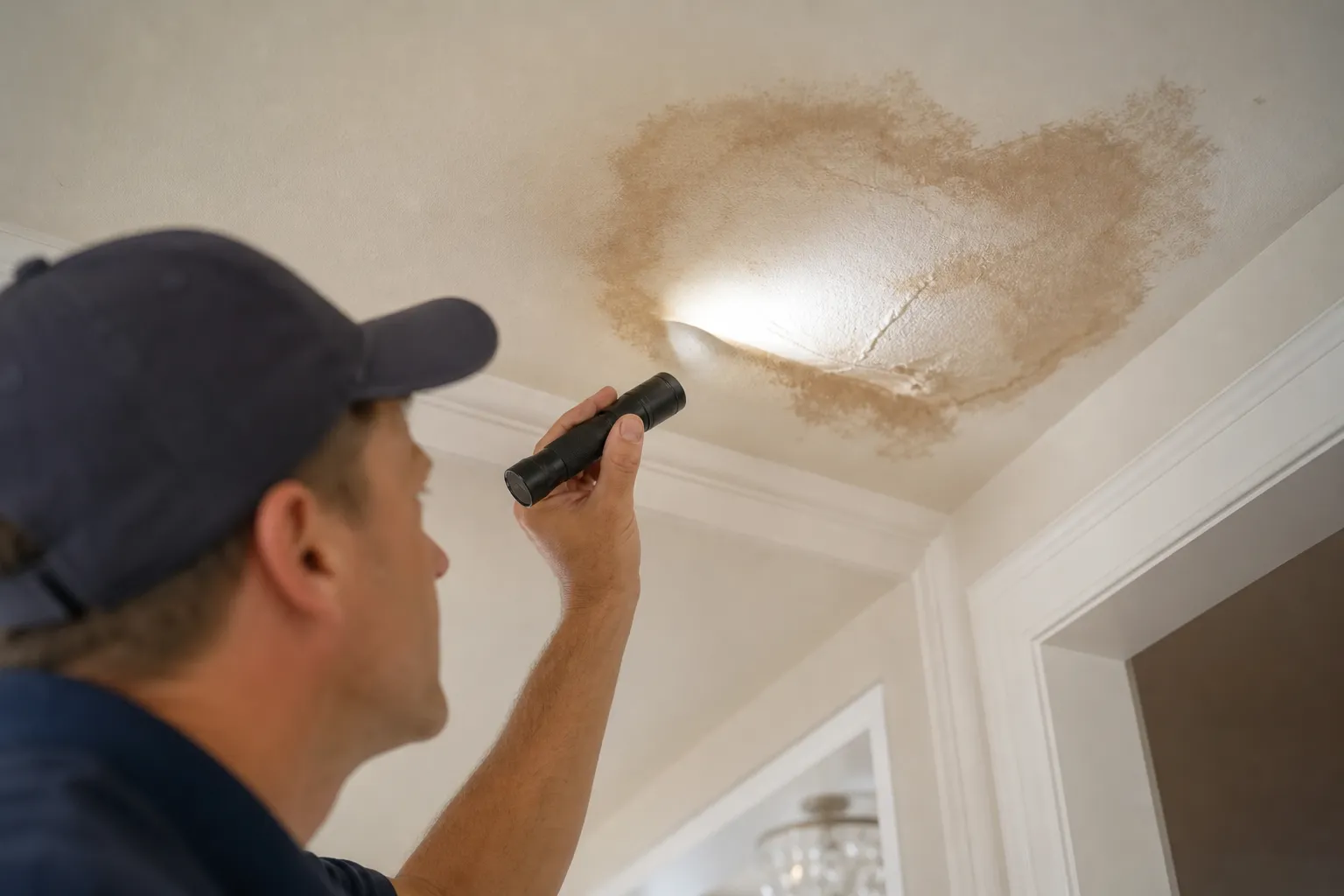
- Any water damage. Soft, stained, sagging, or crumbling drywall isn't just a patch - it points to a leak, and the drywall may be hiding mold. The moisture source has to be found and fixed first, or the new patch fails too.
- Ceilings. Overhead work fights gravity the whole time - compound sags, patches want to fall, and you're on a ladder. Ceiling texture (especially older popcorn) is also harder to match and can contain materials you don't want to disturb.
- Cracks that keep coming back. A hairline crack you've patched twice that returns isn't a surface problem - it's the house moving. It needs the right tape and technique, and sometimes it signals settling worth looking at.
- Corner bead damage. Dinged metal or plastic outside corners need the bead repaired or replaced, not just mudded over.
How to Decide: A Few Honest Questions
When you're standing in front of the damage, run through these:
Is it bigger than my fist?
Under fist-size on a flat wall is DIY territory. Bigger means structural backing and taped seams - lean toward a pro.
Is the wall textured?
If it's dead smooth, you can likely match it. If it's orange-peel, knockdown, or hand-troweled, matching is the real challenge - and where DIY jobs get spotted.
Is the drywall soft, stained, or sagging?
Any yes here means moisture. Stop - this is a find-the-leak job first, not a patch. Covering it up traps the problem.
Is it on a ceiling or high up?
Overhead and hard-to-reach work is slower, messier, and less forgiving. Worth handing off even when the hole itself is small.
Has this exact spot cracked before?
A repeat crack is the house telling you something. A cosmetic re-patch won't hold; it needs proper technique and sometimes a closer look.
Common Misjudgments
- Assuming size is the only factor. A small patch on a heavy knockdown wall can be harder to hide than a big patch on smooth drywall. Texture often decides the job, not the hole.
- Patching over a stain. Painting or mudding over water damage without fixing the source guarantees a repeat - usually a worse one.
- Mudding over a returning crack. If it came back once, surface filler will let it come back again. It needs the underlying movement addressed.
- Treating a ceiling like a wall. The same hole overhead is a meaningfully tougher, drippier job.
When to Call a Handyman
Call a pro when the hole is larger than your fist, the wall is textured and you can't match it, the drywall shows any sign of water, the damage is on a ceiling, or a crack keeps returning no matter how many times you patch it. These are the cases where doing it yourself usually means doing it twice. Our drywall repair service in Santa Clarita covers large-hole and ceiling repairs, texture matching, water-damage patching, and recurring cracks - typically in a single visit, blended so the wall looks untouched.
Estimated time: DIY-friendly patches run 10 minutes to a couple of short sessions across a day or two (drying time between coats). Pro-level repairs - large holes, ceilings, texture matching, water damage - are usually a 1–3 hour visit depending on the area.