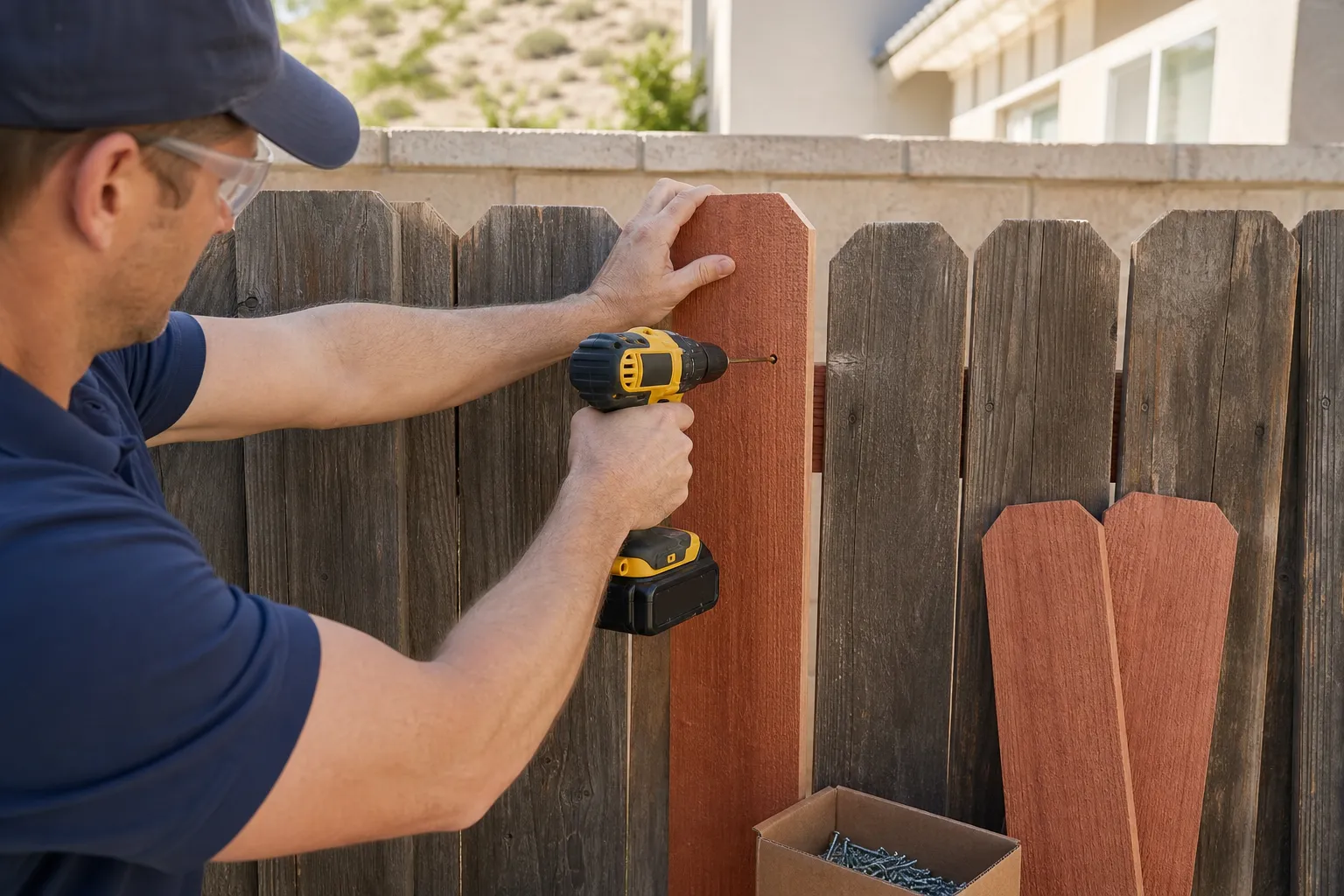
A cracked picket or a leaning run of fence puts every homeowner at the same fork in the road: patch the one board and move on, or bite the bullet and redo the whole section? Guess wrong in the cheap direction and you'll be back out there next month; guess wrong in the expensive direction and you've paid for a section you didn't need. The right call depends less on how bad it looks and more on what's actually failing underneath.
This is a decision guide, not a step-by-step. The short version: replace individual pickets when the framing and posts are sound, replace a whole section when the rails or multiple boards are gone, and reset or replace posts when the fence leans no matter what you do to the boards. When the damage is limited and the structure is solid, this is a DIY-friendly job; when posts are involved, it's usually worth a pro. Here's how to tell which situation you're in.
First, Diagnose the Real Damage
Before deciding how much to replace, figure out how far the damage actually goes. Three quick checks tell you most of it:
- Poke the wood. Press a screwdriver into any dark, soft, or spongy spots. If it sinks in, that's rot - and rot spreads along the grain, so one soft picket often means its neighbors are going too.
- Push on the posts. Grab each post and rock it. A solid post with a few bad boards is a cheap fix. A post that wobbles is the actual problem, whatever the boards look like.
- Check the rails. The horizontal rails carry the pickets. If a rail is cracked, sagging, or pulling away, individual pickets won't hold to it - you're into section territory.
Wind damage and rot look different. A Santa Ana gust tends to crack or snap boards along a run while the wood is still hard; rot shows up as soft, discolored wood low on the posts and boards where sprinklers and ground moisture linger.
Option 1: Replace Individual Pickets
Best when: the posts and rails are solid and only a handful of boards are cracked, split, or missing.
This is the cheapest and most DIY-friendly fix. You pry off the damaged pickets, cut replacements to length, and screw them to the existing rails. The catch is cosmetic: new boards won't match weathered ones, so a few bright pickets stand out until they gray down over a season. For scattered damage on an otherwise healthy fence, that's a fair trade.
- Cost: lowest - a few boards and screws.
- Longevity: as good as the framing behind it, which is the whole point of checking the rails first.
- Watch out for: replacing the same boards twice because you didn't notice the rail behind them was failing.
Option 2: Replace the Whole Section
Best when: a rail is broken, many boards in one run are damaged, or the section took a direct wind hit and is racked out of square.
Once you're replacing more than about a third of the boards in a run - or the rail they hang on is shot - piecemeal repair stops making sense. Rebuilding the section between two good posts gets you fresh rails and pickets that all weather together, so it looks intentional instead of patched. It costs more in materials and time, but you're not chasing failures board by board.
- Cost: moderate - new rails and a full run of pickets, but the posts stay.
- Longevity: high, since the whole panel is new and uniform.
- Watch out for: rebuilding a beautiful section onto posts that are already loose - check them before you start.
Option 3: Reset or Replace the Posts
Best when: the fence leans, a post rocks in the ground, or the base of a post is rotted through.
Posts are the foundation, and no amount of new boards fixes a bad one - a leaning post drags fresh pickets down with it. Resetting means digging out the old footing and setting the post in fresh gravel and concrete; a rotted post gets replaced outright. This is the most labor-intensive option and the one most worth handing to a pro, because a post set even slightly out of plumb throws off every board attached to it.
- Cost: highest per post - digging, concrete, and cure time.
- Longevity: the longest-lasting fix, because it repairs the part that actually holds the fence up.
- Watch out for: setting a post in a plain dirt hole with no gravel drainage - that's how the next post rots out early.
The Cost vs Longevity Tradeoff
The temptation is always to do the smallest repair. Sometimes that's right - a couple of pickets on a sound fence is money well saved. But the cheapest fix is only cheap if the structure behind it is healthy. Spend ten minutes poking the wood and rocking the posts, and you'll know whether you're buying five years or five weeks. As a rule of thumb: fix pickets when the bones are good, rebuild the section when the rails are gone, and reset the posts the moment the fence leans.
Common Mistakes to Avoid
- Replacing boards on a failing rail. The new pickets have nothing solid to hold to, so they fail right along with the old ones.
- Ignoring a leaning post. Fresh boards on a bad post just lean too - start at the ground.
- Matching rot with more untreated wood. Use rot-resistant material low to the ground where moisture collects.
- Underestimating wind damage. A gust that cracked one board usually stressed the whole run - inspect the neighbors before you call it done.
When to Call a Handyman
Call a pro when the decision involves posts - leaning, loose, or rotted - or when a whole section needs rebuilding and you'd rather it match and last. A handyman can tell in one look whether your fence needs three boards or three posts, and quote it up front so you're not guessing. Our fence and gate repair service in Santa Clarita handles everything from swapping a cracked picket to resetting posts and rebuilding wind-damaged sections in a single visit.
Estimated time: 15–30 minutes to swap a few pickets; a couple of hours to rebuild a section; a half-day or more once posts have to be reset and cure.